
We begin by establishing the seismic hazard context for your site — reviewing regional seismicity records, fault locations, historical earthquake data, and ground motion attenuation models to determine the design peak ground acceleration and earthquake scenarios that will govern the liquefaction assessment.
We conduct or review a targeted geotechnical investigation program — including borehole drilling, standard penetration testing, and cone penetration testing — specifically designed to characterize the loose, saturated sandy soil layers that carry the greatest liquefaction susceptibility across the full depth of interest.
Using SPT and CPT data collected from the site investigation, we apply internationally recognized simplified procedure methods to calculate the cyclic stress ratio imposed by the design earthquake and compare it against the cyclic resistance ratio of each soil layer — determining the factor of safety against liquefaction triggering at every depth across the site.
Where liquefaction triggering is predicted, we assess the engineering consequences for the site and structure — calculating post-liquefaction ground settlement, evaluating lateral spreading potential on sloped or waterfront sites, and estimating the structural damage implications for the proposed foundation system.
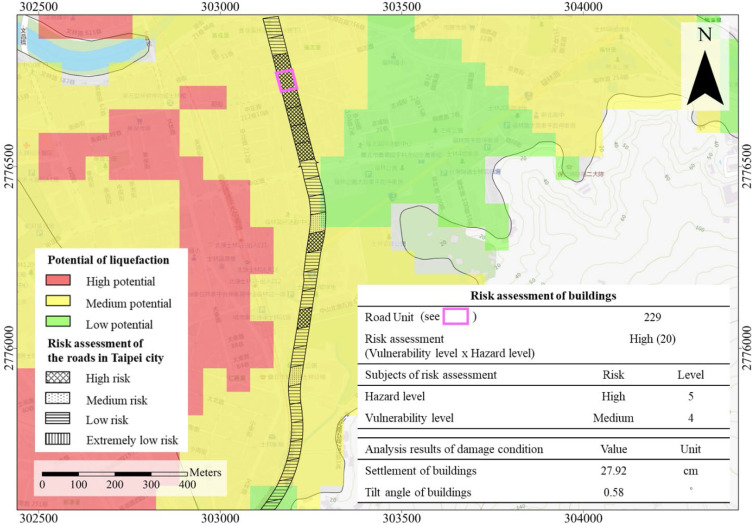
We integrate the layer-by-layer liquefaction analysis results into an overall liquefaction potential index calculation for the site — classifying the overall ground liquefaction severity and providing a clear, quantified risk rating that engineers, developers, and authorities can directly use in foundation design and risk management decisions.
Where unacceptable liquefaction risk is identified, we develop targeted engineering mitigation recommendations — covering ground improvement options such as sand compaction piles, stone columns, and densification techniques, as well as foundation system adaptations including deep pile foundations and mat foundation designs — providing a practical, costed, and technically justified path to making the site safe for the planned construction.